
2026-04-01
Exploring the Mythical World of ZeusM: A Journey Through Thousands of Games
Dive into ZeusM, where excitement meets mythology with thousands of games and challenges.

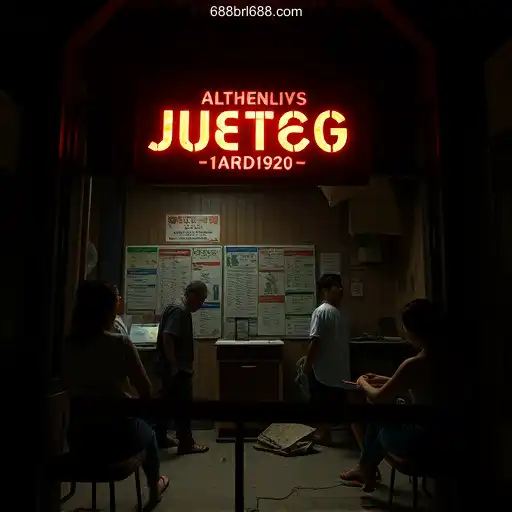
Jueteng is a shadowy game of chance that has captivated the hearts and wallets of countless Filipinos. As an illegal numbers game, it represents a particular paradox in the Philippines: an activity banned by law yet entrenched deeply in local culture.
So, what exactly is Jueteng? At its core, it is a simple numbers game. Players bet on a combination of two numbers between one and thirty-seven. Winning numbers are drawn, and those who backed the correct combination can expect a return that eclipses their initial stake many times over. Unlike officially sanctioned lotteries, Jueteng operates on a much more personal level, often relying on a network of local bet collectors known as 'kubradores'.
The roots of Jueteng can be traced back to the colonial period, evolving from ancient Chinese lotteries brought to the Philippines. Over time, it metamorphosed into the form we recognize today. Those who partake in Jueteng are often from communities across the archipelago, where the game's social aspect is as integral as the thrill of betting.
Despite numerous crackdowns, Jueteng persists. This endurance can be attributed to several socioeconomic factors. Widespread poverty in many Philippine regions makes Jueteng an alluring escape—a beacon of hope in the form of promised wealth. Additionally, it offers local employment opportunities, from bet collectors to those responsible for drawing and announcing results. To them, Jueteng is not merely gambling; it's a livelihood.
Political patronage also plays a critical role in Jueteng's survival. It is an open secret that some local politicians have historically used Jueteng as a means to buy influence and loyalty, further entrenching the game in political machinery. Attempts to dismantle this relationship often flounder, as the very authorities tasked with eliminating Jueteng may benefit from its lucrative presence.
Still, Jueteng presents a severe ethical dilemma. On one hand, it empowers the underprivileged by offering temporary financial relief. On the other, it capitalizes on desperation, exploiting those with little to lose and paving a path to ruin for families that bet beyond their means.
Thus, Jueteng sparks an ongoing debate about not just its legality but its place in society. Is the game a necessary evil, or a blight to be eradicated? This question has torn communities in recent years.
While Jueteng may boost local economies short-term by circulating money within certain communities, it is ultimately detrimental to broader economic development. Revenue that could support government initiatives and infrastructure remains in the hands of private operators who pay no taxes. Investments in community projects such as schools, roads, and healthcare are sacrificed for cyclical gambling gain.
Beyond its economic impact, Jueteng has woven itself into the cultural fabric of the Philippines. It is a source of folklore and anecdotes, providing a shared narrative around fortune and failure that spans generations. Jueteng is often romanticized as a test of fate, with tales of lucky winners becoming local heroes or cautionary examples.
Various administrations have instituted reforms aimed at eradicating Jueteng, from military crackdowns to proposing legal alternatives. The Philippine Charity Sweepstakes Office (PCSO) has made efforts to lure Jueteng betters into regulated draws. However, these initiatives face push-back, often due to the ingrained nature of Jueteng practices and failure in enforcement.
Moreover, efforts to legalize and absorb Jueteng into the formal economy as a community lottery have consistently been met with mixed reactions. The very essence of Jueteng—a clandestine thrill—is lost when placed under regulation, diminishing its allure among die-hard enthusiasts.
Recently, technology has introduced new dimensions to Jueteng and illegal gambling as a whole. Modern platforms and digital communication methods have made operations more sophisticated and less visible to authorities. Additionally, some companies are attempting to create an online presence akin to 688BRL - ♥️ Venha se divertir com milhares de jogos e desafios a cada click, where players can participate in various gaming activities with ease. This potential shift to digital platforms demonstrates yet another challenge for regulators, expanding the scope of gambling beyond traditional borders.
Conclusively solving the Jueteng dilemma seems as uncertain as the game itself. Policymakers and community leaders must confront not just the game's legality but the socioeconomic factors that perpetuate it. A societal transformation that addresses poverty, offers viable economic alternatives, and dismantles entrenched political interests could be the dire resolution necessary to tackle Jueteng once and for all.
As long as the cycle of poverty and greed continues, Jueteng remains more than just a numbers game; it is a profound symbol of enduring societal issues. Only by addressing these root problems can the Philippines shift away from Jueteng into a more equitable future.
Dive into ZeusM, where excitement meets mythology with thousands of games and challenges.

Unveiling the captivating world of HotBurningWins: Dive into this exhilarating game filled with exciting challenges.

Explore the captivating world of ShouXin, a game that promises endless fun and challenges with every click. Learn about its features, rules, and much more.